History of modulation in vibration analysis
In this article, which is the second in a series, This is the theme of the history of modulation in vibration analysis with a fundamental role in diagnostics vibration analysis in machines.
The first article, the Introduction, can be seen herei.
2 History of modulation in vibration analysis
2.1 Introduction
The evolution of Vibration Analysis closely followed the development of electronic instrumentation, of digital computing and signal processing techniques. From the first global amplitude measurements to current cyclostationary analysis and artificial intelligence methodologies, Each technological advance has made it possible to extract an increasing amount of information from vibration signals.
Modulation analysis represents one of the most important steps in this evolution. It is currently considered an indispensable tool for the early detection of defects in bearings., gears, electric motors and other rotating machines. Yet, its adoption was gradual and resulted from the combination of knowledge from mechanical engineering, telecommunications and digital signal processing.
This chapter presents the historical evolution of the main vibration analysis techniques, highlighting the limitations of each approach and the reasons that led to the development of modulation analysis.

Figure 2.1 – Timeline of the evolution of vibration analysis.
2.2 First generation: measuring the overall vibration level
The first industrial applications of vibration analysis emerged in the 1990s. 1960-70 (ex.: founding of IRD Mechanalysis in 1962, one of the landmarks usually cited), driven by the development of piezoelectric accelerometers and portable instruments capable of measuring the global level of vibration.
At this stage, the evaluation of the condition of the machines was based almost exclusively on the measurement of global quantities, What:
- RMS acceleration;
- RMS speed;
- peak-to-peak displacement.
These parameters provided a simple indication of the severity of vibrations, allowing to identify machines whose behavior deviated significantly from normal.
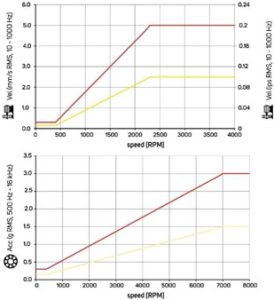
Although this approach was effective for detecting defects that had already developed, had important limitations. The overall vibration value results from the sum of the energy distributed across all frequencies and, therefore, does not allow identifying the source of the problem. Machines with different defects may present similar overall values, while incipient defects often do not cause measurable changes.
Despite these limitations, global level measurement continues to play a fundamental role in assessing the severity of vibrations and forms the basis of several international standards.

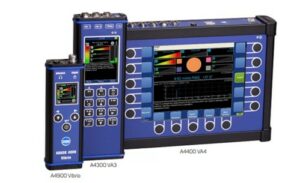
Figure 2.2 – Evolution of instrumentation for measuring and analyzing vibrations
2.3 Second generation: spectral analysis by FFT
The introduction of the Fast Fourier Transform (FFT) in the decade of 1960 and its application in digital analyzers during the following decades revolutionized vibration analysis.
For the first time, it became possible to decompose a complex signal into its frequency components and relate each component to specific mechanical phenomena..
Spectral analysis made it possible to identify characteristic signatures of various defects, for example:
- dominant component at 1×RPM → imbalance;
- components at 2×RPM → misalignment;
- multiple harmonics → mechanical clearances;
- gear frequency → problems in gear transmissions;
- characteristic frequencies of bearings → defects in raceways or rolling elements.
This capability represented a huge advance in relation to measuring the global level, allowing much more specific diagnoses to be made.
Yet, It was quickly discovered that some defects, especially in the initial phase, remained practically invisible in conventional FFT. The impacts generated by small defects in bearings or localized wear on gears had insufficient energy to produce clearly identifiable components in the spectrum..
2.4 Third generation: discovery of the importance of modulation
Experimental observation revealed that many defects did not generate significant new frequencies, but they periodically changed the amplitude of already existing vibrations.
Instead of a new isolated peak appearing, small components appeared distributed symmetrically around a dominant frequency. These components came to be called side bands.
This behavior was already well known in telecommunications engineering., where amplitude modulation produces exactly the same spectral structure. The application of these concepts to mechanical engineering allowed us to understand that a periodic defect acts as a modulating signal that alters a higher frequency vibration, called carrier.
This interpretation constituted a milestone in the evolution of machine diagnosis, as it demonstrated that the most important information is not always found in the frequencies directly associated with the defect, but may be encoded in the sidebands of the carrier frequency.
2.5 Development of envelope analysis
The next step consisted of developing techniques capable of directly recovering the modulating signal.
Surround analysis, initially based on analog rectification and filtering circuits and later implemented by digital processing, has become one of the most effective tools for bearing diagnosis.
The principle is relatively simple: the impacts caused by a defect excite a high-frequency structural resonance. The amplitude of this resonance varies periodically at the characteristic frequency of the defect.. By extracting the signal envelope and calculating its FFT, it becomes possible to directly identify the characteristic frequencies of the bearing.
This methodology significantly increased the sensitivity of vibration analysis and allowed defects to be detected at much earlier stages than was possible using conventional FFT..
2.6 Consolidation of advanced techniques
In the following decades, the evolution of computational capacity has allowed the development of increasingly sophisticated methods to exploit the information contained in modulation.
Among the techniques that have gained relevance, the following stand out::
- Hilbert transform to obtain the analytical signal;
- cepstral analysis to identify periodicities in the spectral domain;
- Kurtosis espectral (Spectral Kurtosis) for automatic selection of the most informative frequency bands;
- Fast Kurtogram for optimizing analysis by environment;
- Cyclostationary Analysis for characterizing signals whose statistics vary periodically;
- Analysis by orders for variable speed machines;
- Synchronous average in time (TSA) for gears.
These methodologies made it possible to increase the reliability of the diagnosis and reduce the influence of noise and phenomena unrelated to the defect..

Figure 2.3 – Flowchart of technological evolution, from the sensor to modern diagnostic algorithms.
2.7 The era of continuous monitoring and artificial intelligence
At the moment, the evolution of digital sensors, Industrial communications and cloud computing have made it possible to implement permanent monitoring systems capable of continuously acquiring and analyzing large volumes of data.
In these systems, modulation plays a central role. Many diagnostic algorithms use parameters derived from envelope analysis as input variables., sidebands or statistical indicators calculated on demodulated signals.
More recently, machine learning techniques (Machine Learning) and deep learning (Deep Learning) began to use these characteristics as fundamental elements for the automatic classification of defects and for predicting their evolution.
Despite the increasing use of advanced algorithms, the physical interpretation of modulation continues to be indispensable. A computational model can identify complex patterns, but the validation of the diagnosis and the definition of maintenance actions require an understanding of the mechanical mechanisms that give rise to them.
2.8 Synthesis
The history of vibration analysis demonstrates a continuous evolution towards extracting increasingly detailed information from measured signals.
Measuring the global level made it possible to assess the severity of vibrations. Spectral analysis by FFT made it possible to identify the origin of the frequency components. Modulation analysis and demodulation techniques revealed previously hidden information, making it possible to detect defects at a much earlier stage.
At the moment, Modulation analysis is one of the cornerstones of condition monitoring of rotating machines and underpins many of the most advanced diagnostic techniques used in modern industry. In the following chapters, the physical mechanisms that originate modulation will be analyzed and mathematical models that describe this phenomenon will be developed..
The continuation of this article can be found at the following links:
3 Concept of modulation and its physical origin